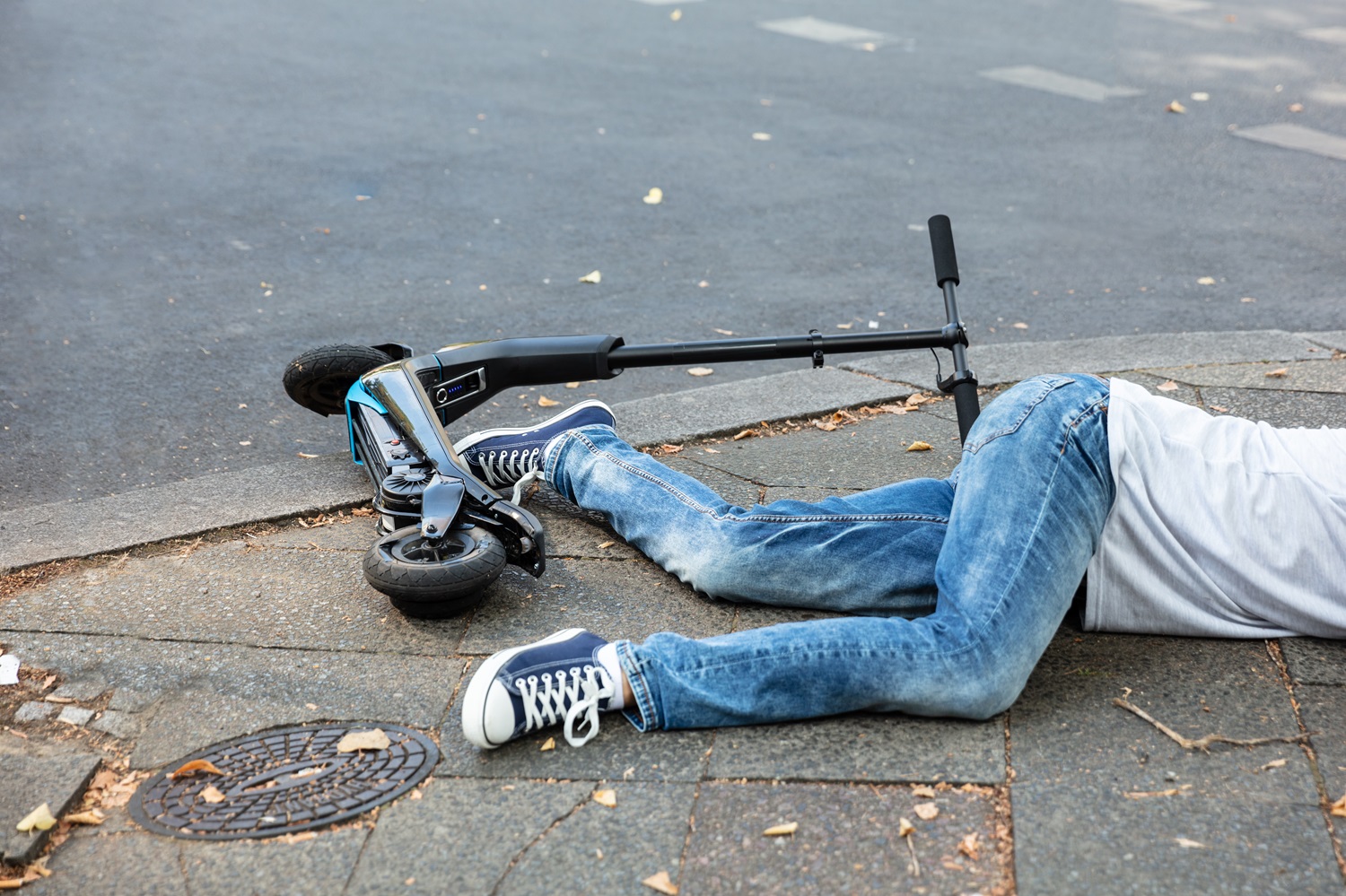
In August 2024, a rider was traveling along Palisade Avenue in Jersey City when the front wheel of his electric scooter allegedly locked without warning. He was thrown onto the road and suffered a serious brain injury. After the electric scooter accident, his legal guardian sued the scooter manufacturer. The company responded by sending the case to arbitration because the online warranty agreement included an arbitration clause.
On November 3, 2026, a federal judge in New Jersey rejected that argument. It wasn’t about the arbitration clause itself, but whether the company could prove the rider knowingly agreed to it.
Quick Answer
An arbitration clause does not automatically prevent a lawsuit after an electric scooter accident in New Jersey. Courts examine whether the rider agreed to the terms and whether the agreement clearly explains the loss of court rights. A November 2026 federal ruling rejected arbitration because the manufacturer could not prove the rider’s agreement.
Why an Electric Scooter Accident Can Leave Riders Without PIP
Electric scooter accidents can have numerous causes, and more than one of them can be in play at once. A driver could hit the rider while hazards in the road cause them to fall, and different causes require different insurance and legal applications.
For example, in Goyco v. Progressive Insurance Company, decided May 14, 2024, the New Jersey Supreme Court considered a rider injured when a car struck his electric scooter. He sought personal injury protection benefits through his own automobile insurance.
There’s a precedent for this; bicycles struck by cars can generally qualify as pedestrians under NJ’s PIP statute. It was worth the try, but the courts ruled the same classification didn’t apply to electric scooters because they’re propelled by electric motors. So, the rider couldn’t get PIP benefits through the pedestrian provisions in his auto policy.
Lawmakers have proposed changing that result. Senate Bill S3167, introduced January 13, 2026, would extend eligibility for no-fault PIP coverage to qualifying bicycle, low-speed electric bicycle, and low-speed electric scooter operators. As of November 2026, the bill remains in the Senate Commerce Committee.
The current ruling doesn’t mean injured scooter riders have no insurance options. Health insurance can cover treatment in the meantime, and if a driver caused the crash, that driver’s bodily injury liability coverage should be the first thing to kick in. If the scooter itself malfunctioned, the manufacturer could be slapped with a product liability claim. Should that happen, the purchase terms can decide where that claim is heard.
What Counts as Notice of an Arbitration Agreement?
Contrary to popular belief, manufacturers can’t always require arbitration just because the website contains a document mentioning it. Two things need to happen:
- The terms need to clearly explain what arbitration means so the buyer understands.
- The buyer needs to knowingly agree to the terms.
The New Jersey Supreme Court addressed the second question in Atalese v. U.S. Legal Services Group in 2014. In that case, the court held that a consumer arbitration provision must communicate that the person is giving up the right to pursue the covered dispute in court. They can’t just include the words “binding arbitration” without explaining that buyers are surrendering their court rights by agreeing.
A clearly written clause still needs to become part of an agreement. To decide that, a judge may look at the checkout screen, whether the buyer had to select an acknowledgment box, how prominently the terms were displayed, and what notices appeared inside or outside the packaging.
The Website Link That Wasn’t Enough
In Isaac v. Segway, U.S. District Judge Brian R. Martinotti started with what terms the manufacturer had presented. The warranty agreement could be downloaded from an expandable section of its website, and a QR code on a warranty card packed with the scooter pointed to the same terms.
So, the question becomes “how did the buyer agree?” They didn’t have to acknowledge the terms at checkout, and there was no way to prove the buyer had electronically signed the agreement or checked a box accepting it.
The manufacturer also lacked an authenticated record of what the webpage looked like when the scooter was purchased. When the scooter first shipped, it was missing a charger, and the court questioned whether the warranty materials had been included at all. A replacement scooter sent later did not create a new arbitration agreement, because the seller was already obligated to provide it.
The court denied the motion to compel arbitration without deciding whether the clause’s wording was valid. As an unpublished federal district court decision, the opinion addresses the evidence in that particular case, not a blanket prohibition on scooter arbitration clauses.
Why a Shipping Box or Checkbox Can Change the Result
But as with all legal stories, the same outcome isn’t always guaranteed. The opposite happened in Pennsylvania. In March 2026, a federal judge enforced an arbitration agreement after considering a shipping box bearing a prominent arbitration notice and directing the buyer to the relevant terms. Instead of hidden on a PDF or QR code requiring extra effort to access, the arbitration notice and terms were right there on the box. That shows a direct effort to get the terms in front of the buyer.
New Jersey courts have also enforced app-based arbitration agreements when users affirmatively accepted clearly presented terms. In an unpublished 2023 rideshare decision, the Appellate Division considered an account-registration process involving a checkbox and language explaining that claims would be resolved outside court. Those decisions involved different facts, and the Pennsylvania case applied a different state’s law.
A clause that was properly presented can still face a challenge under ordinary contract rules if its terms are unconscionable or unenforceable. Terms such as a cap that limits damages far below the cost of a serious injury, or fees that make arbitration too expensive to pursue, could draw that kind of challenge.
And a party can sometimes lose its right to demand arbitration through its conduct during a lawsuit. In Cole v. Jersey City Medical Center (2013), the New Jersey Supreme Court found waiver after a party litigated for 21 months and moved to compel arbitration three days before trial.
If the Scooter Was Defective, Preserve More Than the Receipt
If the front wheel locks or the handlebars collapse for no reason while riding, it brings the quality of the design, manufacturing and warnings into question.
New Jersey’s Product Liability Act, N.J.S.A. 2A:58C-2, recognizes these categories. Proving a defect still requires evidence connecting the product’s condition to the injury.
For a New Jersey defective-product injury claim, the specific model, purchase date, repair history, and any relevant recall information may become important. An expert may need to examine the scooter’s mechanical and electronic components. Repairing or discarding it before that examination could make it harder to establish what went wrong.
Keep the scooter, battery, charger, and any broken components together when it is safe to do so. If a battery is damaged, swollen, or showing signs of overheating, don’t charge or handle it unnecessarily; seek appropriate safety guidance, since a damaged pack can start a battery fire well after a crash.
Purchase records deserve the same attention. Save order confirmations, warranty documents, shipping materials, emails, and screenshots of any available account or arbitration terms. If the dispute concerns the notices shown at checkout, those records may help establish what information the buyer actually received.
Advertised safety features and warranty promises can raise consumer protection questions, so the product listing deserves a screenshot too. A bodily injury caused by an allegedly defective product, though, generally requires analysis under New Jersey’s Product Liability Act.
The Responsible Party May Not Be the Manufacturer
Say there’s noting wrong with the scooter, but the rider gets hit by a car. Without a product defect in play, the rider can pursue a claim against the driver and the driver’s liability insurance. New Jersey’s comparative negligence rules reduce compensation by the injured person’s share of fault. Recovery is barred only when that share is greater than the combined fault of the defendants, so a rider found 50% responsible can still recover half of the damages.
A dangerous road condition presents another possibility. Claims involving a public entity can be subject to the New Jersey Tort Claims Act, including a notice requirement that generally applies within 90 days of a claim arising. An arbitration clause from the scooter purchase doesn’t automatically govern claims against a driver or a public entity.
Key Takeaways After a Scooter Injury
- Under Goyco, a qualifying low-speed electric scooter rider is not treated as a pedestrian for statutory PIP eligibility merely because a car caused the accident.
- A manufacturer’s online arbitration terms are not automatically enforceable. Evidence of agreement matters.
- Preserve the purchase records and the scooter itself, including its packaging and relevant components.
- Identify whether the injury arose from a product defect, another road user, or a dangerous property condition.
- Have the agreement and potential deadlines reviewed early, before evidence or filing opportunities are lost.
Questions Riders Ask After an Electric Scooter Accident
Can I Still Sue if I Clicked “I Agree” When Buying the Scooter?
Possibly. An acknowledgment can be strong evidence that a buyer accepted contractual terms, but a court may still examine the wording, presentation, scope, and enforceability of the arbitration agreement.
If the agreement is enforceable, a covered claim may have to proceed before an arbitrator rather than a judge or jury. Arbitration can still result in a damages award, although procedures and opportunities to appeal are generally more limited than in court.
Does My Car Insurance Cover an Electric Scooter Accident?
Not necessarily. The Goyco decision means a low-speed electric scooter rider does not qualify for statutory PIP benefits as a pedestrian merely because an automobile caused the accident.
Other coverages require separate analysis. Uninsured or underinsured motorist coverage, for example, may still apply when the driver at fault had no insurance or too little. Ask the insurer in writing whether that coverage applies to someone hurt while riding a scooter. Keep a copy of the policy’s declarations page and request a written explanation of any coverage decision.
How Long Do I Have to File a Claim After an Electric Scooter Accident?
New Jersey generally requires personal injury lawsuits to be filed within two years under N.J.S.A. 2A:14-2, although exceptions can affect the calculation.
A purchase agreement may also specify deadlines for bringing claims or requesting arbitration. Whether those contractual limits are enforceable depends on the applicable law and facts; they should not automatically be treated as replacing the statutory deadline.
If a public entity may be responsible for a dangerous road condition, the separate 90-day tort-claim notice requirement deserves immediate attention.
What if the Injured Rider Never Bought the Scooter?
A borrowed or secondhand scooter creates another question: who, if anyone, agreed to the manufacturer’s terms?
The person riding it may never have seen the original checkout screen or received the warranty agreement. That can complicate an attempt to enforce arbitration against them.
There are exceptions, so being a non-purchaser doesn’t guarantee that arbitration is unavailable. A rider who registered the scooter in the maker’s app may have accepted terms there. Someone who sues over the warranty itself may also be bound by the arbitration clause inside that warranty, under a principle courts call equitable estoppel.
The purchase history, transfer of ownership, app-registration records, and documents the rider actually received may all matter.
Sources:
New Jersey Supreme Court, Atalese v. U.S. Legal Services Group, L.P. (2014)
New Jersey Supreme Court, Goyco v. Progressive Insurance Company (May 14, 2024)
New Jersey Appellate Division, Williams v. Ysabel, No. A-1391-22 (Sept. 7, 2023, unpublished)
New Jersey Supreme Court, Cole v. Jersey City Medical Center (2013)
Justia, N.J.S.A. 2A:58C-2, Liability of Manufacturer or Seller in Product Liability Action
Justia, N.J.S.A. 59:8-8, Time for Presentation of Claims (New Jersey Tort Claims Act)