You were creeping along a grocery store aisle when an SUV backed out and folded your front fender. The SUV’s driver says you came out of nowhere. Two days later, an adjuster calls and proposes splitting blame for the parking lot accident down the middle. Hearing that you share fault for a crash you tried to avoid stings, especially at walking speed. New Jersey law sorts these collisions by who had to yield, which can leave one side with far more than half.
Which Lane You Were In Comes First in a Parking Lot Accident
Adjusters sorting out New Jersey car accident claims from a store lot begin with its layout. Insurers call the wide route along the edge or out to the road a thoroughfare. Drivers there generally have the right of way. Anyone coming out of a narrower feeder lane between parked rows usually yields to the main path, much like someone leaving a side street. A vehicle backing out of a spot sits below both and has to wait for a clear opening.
Lawmakers wrote most state traffic statutes for streets and highways. Some New Jersey towns pass ordinances that extend parts of the motor vehicle code to private lots open to the public. Where no local rule applies, courts fall back on the duty every motorist owes to drive with reasonable care. Posted stop signs and painted arrows still count as evidence, even where no officer could write a ticket.
One-way arrows on the asphalt settle many of these disputes. Someone who drove the wrong way down a marked row to grab a closer spot came from a direction other drivers had no reason to watch. Adjusters count a wrong-direction approach heavily in a parking lot accident, sometimes above the question of who was reversing.
Backing Out, Pulling In, and Two Cars in Reverse
Whoever reverses out of a spot usually gets most of the blame for striking a car already moving down the aisle. Backing up limits what anyone can see from the seat, which is why courts ask for extra caution. In a National Safety Council poll, two out of three motorists said they would make phone calls while driving through a parking lot. A forward driver glancing at a screen or cutting across empty spaces can still end up with much of the fault.
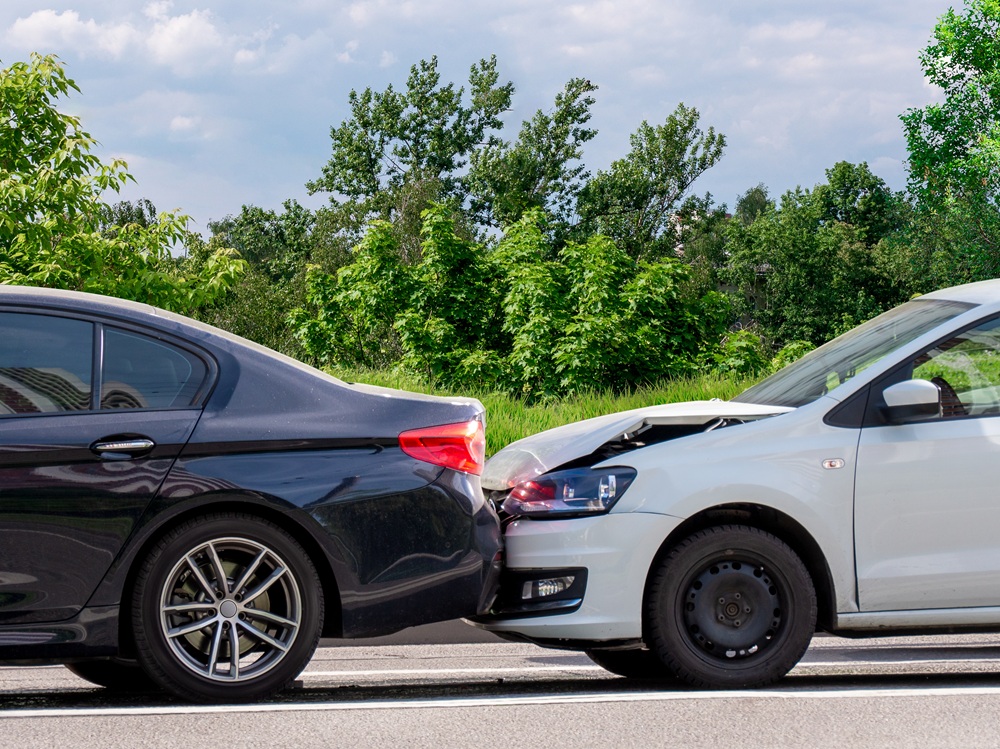
On a highway, whoever is behind usually takes the blame for a rear-end collision. In a lot, someone who rolls into a reversing vehicle may share responsibility if there was time to brake. A scrape along the passing car’s side can suggest the other driver backed into it. Dents square on the front bumper instead point toward a motorist who never stopped.
When two vehicles back out of facing spots and touch bumpers, adjusters commonly start near an even split. Position in the aisle can move that number, because the car farther out had a jump on the other. A backup camera that beeped while its driver kept going can tilt the percentage too.
Two drivers sometimes aim for the same open spot at once. Whoever arrived and signaled first usually has the stronger claim. A motorist who swung wide across the lane to cut in front can end up responsible for both repair bills.
How New Jersey Splits the Blame After a Parking Lot Accident
Insurers and juries divide blame into percentages, and the number they give you changes the size of your check. Under New Jersey’s Comparative Negligence Act, you can recover if your portion is not greater than the other driver’s. Recovery then drops by the same figure, so 30 percent of the fault on a $20,000 loss leaves $14,000. Someone at an even 50/50 can still collect half.
An adjuster’s opening 50/50 offer is a negotiating position, and no statute requires it. Saying yes on the first call is one of the common mistakes after a car accident. Each point of fault you agree to comes straight off your payout. A rough sketch of the aisles and photos of both cars where they stopped can move the percentage in your favor.
Personal injury protection on your auto policy pays medical bills in New Jersey up to its limits, whoever caused the crash. Repairs and any pain-and-suffering claim come from the at-fault driver’s liability insurance, reduced by your portion of the blame. The lawsuit option you picked when you signed up also decides whether that second payment is available.
A Dark Light Pole Can Put the Owner on the Hook
Sometimes the crash traces back to someone who never sat behind the wheel. A shopping center that leaves a stop sign flattened for months, or lets light poles stay dark, may share responsibility. Injured drivers can go after the owner through a premises liability claim. A New Jersey jury can then add the business to the percentage split alongside both motorists.
After a big storm, plow crews push snow to the ends of rows. A six-foot mound at the corner can hide oncoming cars from anyone backing out of the last spot. Whoever manages the property usually chooses where those piles go, which can bring the owner into the claim.
Evidence in a lot disappears faster than on a road. Many store camera systems record over footage within days or weeks, and crews repaint faded lines on their own schedule. These items help most when someone collects them before leaving or on a return trip a day or two later:
- Photos of arrows, stop signs, and lane markings near the impact point, taken from where each driver sat
- A police report, even a short one, listing the hour, location, and other driver’s insurance details
- Phone numbers for witnesses, including store employees who saw the collision
- A written request asking the store or property company to save camera footage from the crash
An email to a store manager the same day can keep that footage from vanishing. If the business refuses, a preservation letter from an attorney makes the request in writing.
Other Questions After a Parking Lot Accident
Will police decide fault for a parking lot accident on private property?
No. An officer’s write-up gives insurers a starting point, and the final percentages come from adjusters or, in a lawsuit, a jury. Notes written after both cars had moved can say less than your own photos, so reading the report for mistakes within the first week makes sense.
Can a pedestrian share fault in a lot collision?
Juries can find a shopper partly responsible for stepping out between two parked vans while reading a text. Their share of the blame comes off whatever they recover, though drivers still must watch for people on foot anywhere in a lot.
How long does someone have to file a claim in New Jersey?
Two years from the crash date applies to most personal injury lawsuits in New Jersey. That clock keeps running while an insurer investigates. Anyone with a claim stalled for months has reason to call a lawyer well before the second anniversary.
Before You Sign Off on an Even Split
A signed release usually ends a claim against everyone it lists, including a property owner who never came up on the first call. Whether the business running the lot belongs in the case needs an answer before that signature. A personal injury lawyer can compare your photos, the police report, and any footage response with the adjuster’s percentage during a free review.