A buck stepping out of a tree line at dusk gives you about a second to react. If you hit a deer in New Jersey, what you do with it can decide which policy pays. Who was behind you, or coming the other way, determines whether another driver owes you money. A straight-on strike with no other car is the easy version, since your own coverage fixes the damage.
Deer figure in thousands of New Jersey crashes every year, mostly between late October and mid-December. Once clocks fall back in early November, the drive home overlaps with the early-evening hours when bucks move most. So a road you drove all summer without a close call can turn risky within a week.
What to Do in the First Minutes After You Hit a Deer
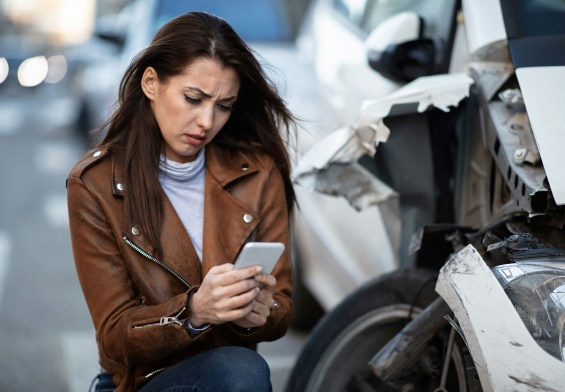
If you hit a deer and can still drive, pull onto the shoulder and turn on the hazard lights. When the vehicle won’t move, stay inside with your belt on. Passing traffic can strike a driver standing beside a disabled car in the dark. Leave the animal alone, even if it looks dead (a stunned buck can get up and kick hard enough to break a bone).
Then check yourself and every passenger before you look at the bumper. Someone who feels fine at the scene can still have a traumatic brain injury from hitting the steering wheel or side window. Headaches or nausea may show up hours later. A same-day urgent care visit can create a record tying those symptoms to the crash.
When New Jersey Law Requires a Police Report
State law requires you to notify local police right away when a crash hurts or kills anyone. The same rule applies when property damage to any one person tops $500, and an animal strike almost always clears that amount. One headlight assembly on a newer car can cost more by itself. New Jersey Fish & Wildlife and NJDOT, the state’s transportation agency, also ask drivers to report every deer collision, whatever the repair bill. Calling from the shoulder takes a few minutes and gets you a case number before a tow truck arrives.
An adjuster will look for that police record first, since it shows when and where the strike happened. Skipping the call is one of the mistakes that hurt a claim before any offer arrives, because the insurer then has only your word. New Jersey’s Department of Banking and Insurance also urges drivers to photograph the vehicle damage and the roadway. Snap a photo of any fur stuck in the grille before a tow driver or body shop cleans the front end.
Liability-Only Coverage Leaves the Repair Bill With You
Damage from a deer strike falls under comprehensive coverage, which is optional in New Jersey. The Department of Banking and Insurance warns that a liability-only policy pays nothing toward your own car. Your carrier covers only what the repair costs above your deductible. With $1,000 out of pocket, a $1,400 bumper job nets you $400. Some drivers dropped that protection on an older vehicle and never added it back after buying a newer one.
Insurers generally treat a direct hit on an animal as a not-at-fault loss, so it shouldn’t raise your premium. When you compare quotes this fall, check whether the insurance coverage you’re pricing includes comprehensive. Lenders typically insist on that line for a financed car, so drivers still making payments may not be able to drop it.
Why Swerving Can Turn a Comprehensive Claim Into a Collision Claim
A swerve can send a car into oncoming traffic or a utility pole, and those crashes turn fatal more often than a straight-on strike. That risk is why New Jersey’s transportation and wildlife agencies tell drivers facing a deer to brake firmly and stay in their lane. Insurers also sort the loss by what the vehicle struck. Steering into a guardrail or tree turns the damage into a collision claim, frequently with a higher deductible. The carrier may also count it as an at-fault accident, which can raise your premium for several renewals.
How PIP Handles Your Injuries Regardless of Fault
Your own Personal Injury Protection pays your medical bills after a deer strike, whether or not anyone was at fault. New Jersey’s no-fault system means nobody has to accept blame before payments start. A standard plan defaults to $250,000 in PIP benefits. The bare-bones basic policy offers $15,000, which one emergency visit with a CT scan can use up. Relatives in your household and passengers without their own auto insurance can usually claim through your coverage too.
PIP stops at medical bills and some lost wages. Pain and suffering damages come only from suing another driver. After a single-car deer strike, your own policy is usually the only source of injury money.
When Another Driver Shares the Blame After You Hit a Deer
Say you’re on a two-lane road just after sunset when a doe steps out. You brake hard and stop with a foot to spare. Two seconds later, the pickup behind you hits your bumper. State law bars following more closely than speed and conditions allow, so leaving room was that driver’s job. Their liability insurance owes you for the repair, and your injuries may support a claim too.
An oncoming driver who dodges a deer and crosses the center line into you is usually responsible for that impact. Insurers and courts apply the fault rules used for other New Jersey vehicle accidents, and swerving for an animal doesn’t excuse crossing into your lane. Turn the roles around, and a swerve that saves your hood but clips another car sends its occupants’ injury claims to your liability coverage.
Suing the Other Driver Under New Jersey’s Fault Rules
Collecting pain and suffering damages from the other driver starts with a box on your own policy. The default selection, the “limitation on lawsuit” option that lawyers call the “verbal threshold,” applies unless you paid extra to remove it. Under that limit, you need an injury that state law spells out. Those injuries include a displaced fracture, significant scarring, and a permanent condition a doctor confirms with objective tests. Soft-tissue neck and back strains, a frequent result of rear-end crashes, can fall short without imaging that shows lasting damage.
A jury can also split fault between you and the other driver. You can recover as long as your share is no greater than theirs, and your award drops by your percentage. If jurors put 20 percent on you for braking without checking your mirror, a $50,000 verdict becomes $40,000.
You have two years from the crash to file suit. A neck injury that seemed minor in November can still keep you off work next summer, when about a third of that time is already gone. Treatment records from the first week can decide whether the harm clears the threshold.
Questions Drivers Ask After They Hit a Deer
Does hitting a deer go on your driving record in New Jersey?
No. Hitting a deer adds nothing to your driving record by itself, because points come only from traffic violations. Your insurer keeps a separate claim history, though, and other carriers can usually see it when you shop for a new policy.
Should I file a claim if the damage looks minor?
Get a repair estimate before you decide. Bumper covers on newer cars hide radar sensors and crash absorbers, so a dent that looks like a $300 fix can cost thousands. If the quote comes in under your deductible, paying the shop directly keeps the loss off your claim history.
Will my insurance pay for a rental car after I hit a deer?
Only if your policy includes rental reimbursement, a separate add-on that some drivers skip. Check your declarations page for a line covering transportation costs, and look at the daily cap before you reserve a car.
The Deer Is Never the Defendant
Pull up your declarations page this week, since it shows the choices that will decide what happens if you hit a deer before your next renewal. Look for a comprehensive deductible you could pay tomorrow and a PIP limit above the $15,000 basic floor. If a crash already hurt you and another driver played a part, you can have a car accident lawyer review the police report and treatment records early. Bring the case number from the shoulder that night so the office can request the officer’s write-up right away.
Sources
New Jersey Department of Transportation and New Jersey Department of Environmental Protection. NJDOT, DEP Warn Motorists to Drive With Extra Caution as Deer Activity Increases, Daylight Decreases Due to Earlier Twilight.
New Jersey Department of Banking and Insurance. Commissioner Badolato Warns Drivers to Watch Out for Deer.