
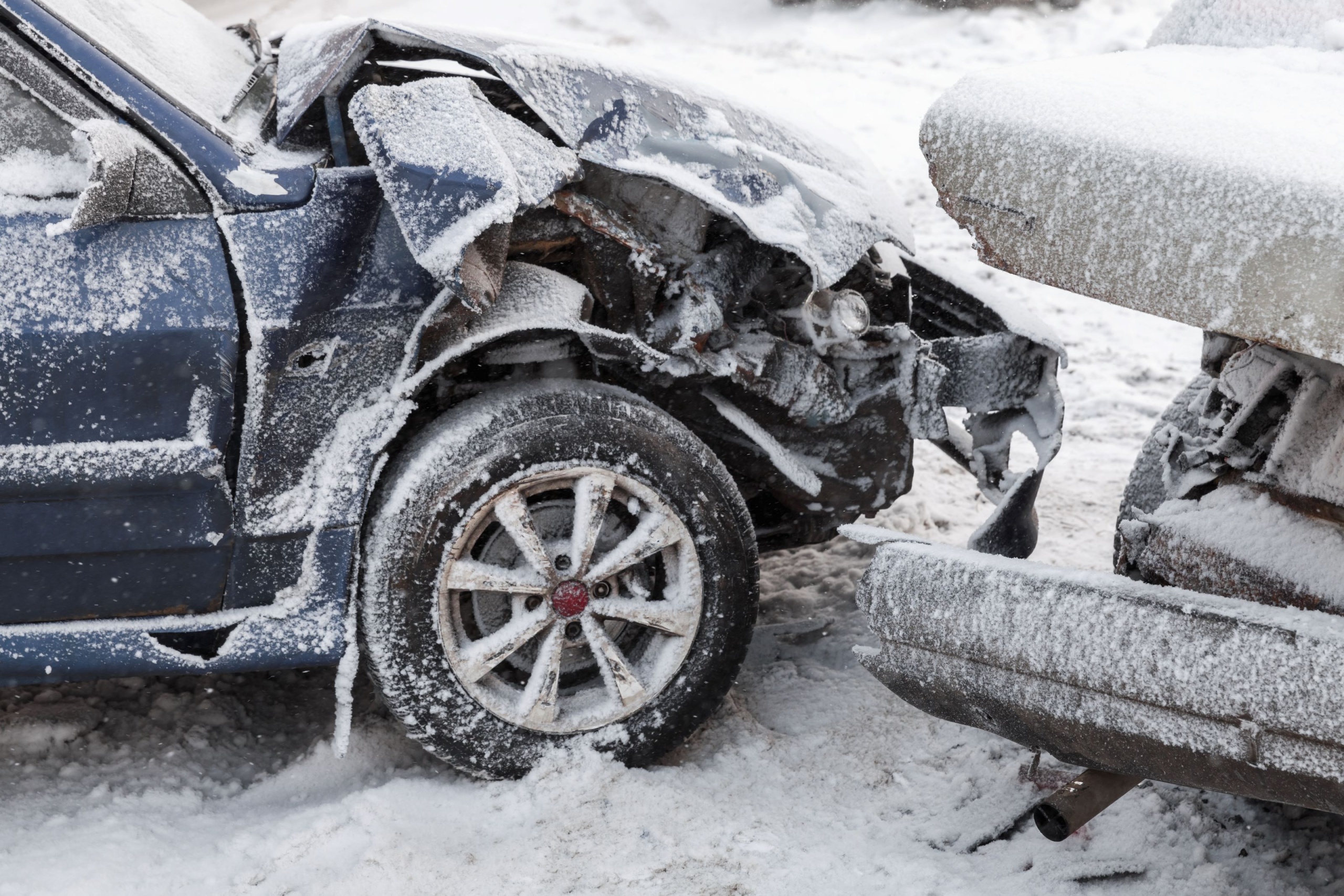
New Jersey winters are rough. Freeze–thaw cycles, overnight refreezing, and shaded parking lots create thin, invisible “black ice” that can drop you in an instant. Law firms across the state report a spike in winter slip-and-fall claims every year, especially in parking lots and on commercial walkways. (haroldgerrlaw.com)
Black ice is dangerous because it blends into the pavement. You may not see it until you are already on the ground. At the same time, New Jersey law in this area is complicated by:
- The “ongoing storm” rule (when owners must clear snow/ice) (Kennedys Law)
- The 51% modified comparative negligence rule (your fault vs. the property owner’s fault) (Miller & Gaudio PC)
- Extra rules and deadlines for public property under the New Jersey Tort Claims Act (Law Offices of Anthony N. Picillo)
This guide explains your legal rights after a black ice fall in New Jersey and how these cases are proven, especially when the hazard was hard or impossible to see.
Important: This article is general information about New Jersey law, not legal advice. For advice about your situation, talk to a lawyer licensed in New Jersey.
Quick Answer: What Are My Rights After a Black Ice Injury in NJ?
If you’re hurt on black ice in New Jersey, you may have a claim against the property owner or whoever controls the area if they failed to act reasonably to prevent or fix a dangerous condition they knew or should have known about. You can usually recover damages as long as you are 50% or less at fault, but you must prove the hazardous condition and act before strict New Jersey deadlines run out. (haroldgerrlaw.com)
What Is Black Ice and Why Is It So Dangerous?
How Black Ice Forms in New Jersey Winters
“Black ice” is a thin, nearly invisible layer of ice that forms on pavement and other surfaces. It often forms when: (Edelstein Law)
- Snow melts during the day and refreezes overnight
- Water runs from downspouts, roofs, or snow piles onto walkways or parking lots and freezes
- Freezing rain coats the ground with a clear layer of ice
Common problem areas:
- Store and apartment parking lots
- Walkways near downspouts or sloped pavement
- Shaded sidewalks and entrances that don’t see sun
- Edges of lots where plowed snow piles melt and refreeze
Because black ice is clear and flat, it can look just like wet pavement until it’s too late.
Why Black Ice Cases Are Different
Black ice cases are often harder to prove than obvious hazards like large snow piles or visible ridges:
- The ice is hard to see, so property owners often say it was “open and obvious” or blame you for not watching where you were going.
- Liability often turns on weather history, drainage, and maintenance practices, not just what things looked like at one moment. (Edelstein Law)
That’s why good documentation and a focused legal strategy matter.
When Are New Jersey Property Owners Liable for Black Ice Injuries?
Basic Premises Liability for Snow and Ice
Under New Jersey premises liability law, commercial property owners and occupiers (like stores, offices, malls, and many landlords) generally have a duty to keep their premises reasonably safe for lawful visitors. (haroldgerrlaw.com)
In a black ice case, that usually means you must show that:
- There was a dangerous condition (black ice).
- The owner or occupier knew or should have known about it (actual or constructive notice).
- They failed to take reasonable steps to prevent, treat, or warn about the hazard.
- That failure was a proximate cause of your injuries.
What counts as “reasonable” depends on the facts: the severity of the weather, the nature of the property, how long the condition existed, and what steps were actually taken.
The “Ongoing Storm” Rule and Its Limits
In Pareja v. Princeton International Properties (2021), the New Jersey Supreme Court adopted the “ongoing storm” rule for commercial properties. (Justia Law)
In simple terms:
- A commercial landowner usually does not have a duty to remove snow or ice while precipitation is still falling.
- The duty to clear, salt, or sand arises within a reasonable time after the storm ends.
Since Pareja, New Jersey courts have applied the rule broadly and confirmed that there is no separate duty to pre-treat walkways during a storm, such as salting before freezing rain hits. (Freeman Mathis & Gary)
However, there are important limits and exceptions:
- If the owner’s own conduct makes things worse (for example, they create a drainage problem or move snow into a spot that is known to refreeze), they may still face liability. (Kennedys Law)
- If ice formed from a pre-existing hazard, like a chronic drainage issue that causes black ice long after a storm, the ongoing storm rule may not protect them. (kcrlawfirm.com)
Black Ice as a “Hidden Hazard”
Black ice is often argued as a “hidden hazard”:
- If a property owner knows that a certain area regularly forms black ice after storms or temperature swings, they may be expected to monitor and treat that area even when conditions look clear from a distance. (kcrlawfirm.com)
- Failing to address a known trouble spot—like water from a downspout that always ices over—can support liability even if the ice was thin and hard to see.
The key question is usually not “Could anybody ever slip here?” but “Did this owner act reasonably, knowing how their property behaves in winter?”
Comparative Negligence in NJ Black Ice Cases (The 51% Rule)
How New Jersey’s Modified Comparative Negligence Works
New Jersey follows a modified comparative negligence system, often called the “51% rule.” (Miller & Gaudio PC)
In practice:
- You can recover damages only if you are 50% or less at fault.
- If you are 51% or more at fault, you recover nothing.
- If you are partly at fault, your recovery is reduced by your percentage of fault.
Example:
If your damages are $100,000 and a jury says you are 20% at fault and the property owner is 80% at fault, you can recover $80,000.
How the Other Side Uses Comparative Negligence Against You
In black ice cases, the defense often argues that you should bear much of the blame, for example:
- “You should have seen the shiny patch.”
- “You knew it was freezing and chose to walk there anyway.”
- “You wore the wrong shoes for the conditions.”
Their goal is to push your fault percentage over 50% or at least reduce the amount they might have to pay.
Why Evidence of a Hidden Hazard Matters
Strong evidence that the ice was hard or impossible to see, or that it came from poor maintenance or drainage, helps:
- Show that the condition was unreasonably dangerous
- Shift more of the fault back to the property owner
- Protect your claim from being cut down—or barred completely—under the 51% rule
That’s why what you do right after the fall is so important.
Proving a Black Ice Claim: How to Show a Hidden Hazard
Immediate Steps After a Black Ice Fall
After getting medical help, try to document the scene before it changes:
- Take close-up and wide-angle photos of the area where you fell.
- Capture lighting conditions, shadows, and the overall parking lot or walkway.
- Look for clues:
- Footprints or tire tracks in the area
- Snow piles or plow lines nearby
- Downspouts or drainage pointing at the icy spot
- Get names and contact information for anyone who saw you fall or saw the condition beforehand. (Birkhold & Maider)
Keep the shoes and clothing you were wearing in a safe place without washing or altering them. That can matter later if the defense tries to blame your footwear or how you walked.
Evidence a Lawyer May Use to Prove Black Ice Liability
In a serious black ice injury case, your lawyer may gather:
- Weather records from official sources to show temperature swings, freezing rain, or repeated freeze–thaw cycles. (Edelstein Law)
- Maintenance and snow/ice removal records, including any contracts with snow removal companies. (static.oslaw.com)
- Surveillance footage from stores, buildings, or parking lots, if available. (Birkhold & Maider)
- Photos of long-term issues such as sagging gutters, misdirected downspouts, or sloped areas that repeatedly ice over. (kcrlawfirm.com)
They may also look for witness statements and local ordinances about snow and ice removal in your town.
Expert Testimony in Black Ice Cases
In more complex cases, lawyers sometimes work with:
- Weather experts (meteorologists) to explain when and how the ice likely formed. (Edelstein Law)
- Property safety or engineering experts to talk about reasonable snow/ice management, drainage design, and safe maintenance practices.
These experts help a jury understand why the black ice formed and what the property owner could have done to prevent it.
Special Issues: Black Ice on Public Property in New Jersey
The New Jersey Tort Claims Act and the 90-Day Notice
If you slipped on black ice on public property—for example:
- A sidewalk by a municipal building
- A public parking lot
- Property owned by a town, county, school, or state agency
—your case is governed by the New Jersey Tort Claims Act (TCA). (Law Offices of Anthony N. Picillo)
Key point:
- You usually must file a Notice of Claim within 90 days of when your claim “accrues” (when you knew or should have known about the injury and that a public entity may be responsible). (Law Offices of Anthony N. Picillo)
If you miss this 90-day deadline, you can almost always lose your right to sue the public entity, no matter how serious your injuries. Courts can sometimes allow late notice within one year for “extraordinary circumstances,” but that is limited and fact-specific. (Law Offices of Anthony N. Picillo)
Proving a “Dangerous Condition” on Public Property
To recover under the Tort Claims Act, you generally must show: (Semeraro & Fahrney, LLC)
- There was a dangerous condition on public property (for example, recurring black ice from poor drainage).
- The public entity created the condition, or knew/should have known about it in time to fix it.
- They acted unreasonably in failing to protect against it.
- The dangerous condition was a proximate cause of your injury.
That’s a higher bar than for private property, and another reason to get legal help quickly in public-property black ice cases.
What Compensation Can You Seek for a Black Ice Injury?
Every case is different, but typical damages in a New Jersey black ice slip-and-fall claim may include:
- Medical expenses (past and future)
- Lost wages and future loss of earning capacity
- Pain and suffering
- Loss of enjoyment of life
- Out-of-pocket costs, such as transportation to treatment or help with daily tasks while you recover
Factors that affect case value:
- Severity and permanence of your injuries
- Strength of the evidence against the property owner
- Any percentage of fault assigned to you under the 51% rule
- Whether the defendant is a private owner or a public entity (with TCA limits and defenses)
How a New Jersey Black Ice Injury Lawyer Can Help
You are not required to hire a lawyer after a fall. But black ice cases in New Jersey can be fact-intensive and legally complex, especially with the ongoing storm rule, comparative negligence, and public entity deadlines in play.
A New Jersey slip-and-fall attorney can:
- Identify who actually controls the property (owner, tenant, management company, snow removal contractor).
- Send preservation letters for video, maintenance logs, and weather/salting records before they are lost.
- Develop a strategy to show the black ice was a hidden hazard, not something you should have easily seen.
- Gather experts and evidence to push back against blame under the 51% rule.
- Make sure you comply with the two-year statute of limitations and, if needed, the 90-day TCA notice for public entities.
Because deadlines and evidence issues are so important, it’s usually wise to talk with a lawyer as soon as you can after the fall.
Key Takeaways: Black Ice Injuries and Hidden Hazards in New Jersey
- Black ice is a hidden hazard, but you still must prove that a property owner or occupier knew or should have known about a dangerous condition and failed to act reasonably. (kcrlawfirm.com)
- New Jersey’s ongoing storm rule limits when commercial owners must clear snow/ice, but it has important exceptions, especially for pre-existing hazards or conditions the owner made worse. (Justia Law)
- The state’s 51% comparative negligence rule means your actions will be scrutinized, but you may still recover if you are 50% or less at fault. (Miller & Gaudio PC)
- Good evidence—photos, witness information, weather data, maintenance records, and expert input—is critical to proving a black ice claim. (Edelstein Law)
- If public property is involved, the 90-day Tort Claims Act notice is a strict trap—miss it and you may lose your rights entirely. (Law Offices of Anthony N. Picillo)
- Talking with an experienced New Jersey black ice injury lawyer early can help protect your rights, preserve key evidence, and navigate complex rules and deadlines.