
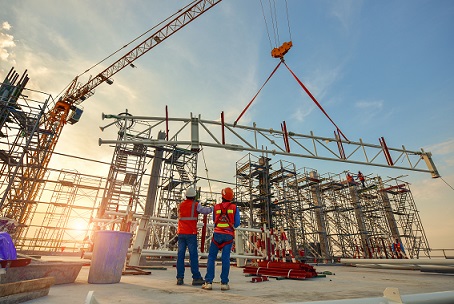
An injured carpenter in New Jersey usually hears about one claim, workers’ comp, and stops there. On a busy job site, three or four other companies may share the blame for the same fall. A construction accident lawyer starts by listing every business that had crews, gear, or contracts there that day. Each one is a possible defendant outside your boss’s insurance policy.
Falls kill more builders than any other hazard. The choice to skip a guardrail or a harness anchor may belong to someone other than your own supervisor. On a site with four subcontractors, that call may have come from a crew you never worked with.
What Workers’ Comp Pays, and Where It Stops
Under the workers’ compensation laws in New Jersey, you give up the right to sue your employer. In return, you get benefits without having to prove fault. Comp covers your medical care and replaces part of your lost wages. The state Department of Labor sets that benefit at 70 percent of pay, capped at $1,199 weekly for 2026 injuries. So a carpenter who makes $2,000 a week collects the cap, about three-fifths of a normal check.
Comp pays nothing for pain and suffering. A lasting injury earns a fixed award based on the body part and how much use you lost. For a crushed hand or a fused spine, that sum can fall well short of a lifetime of lower earnings.
The Narrow Exception for Suing Your Own Employer
New Jersey courts allow a direct suit against the business that pays you only for an “intentional wrong.” That standard requires proof your boss knew an injury was all but certain. Pulling a safety guard to speed up output, then sending a worker to run the machine, has met that test. You can sue your employer directly only with evidence that someone warned management beforehand, such as a written complaint about the hazard that the company ignored. Few construction cases clear that bar, so the stronger claim usually points at another firm on the site.
Who a Construction Accident Lawyer Looks at Besides Your Employer
Say you frame for a subcontractor on a three-story townhouse job. A crew from the general contractor pulls a section of guardrail to bring in trusses and leaves the opening unguarded. You step backward and drop 22 feet onto the slab. A fall like that can cause a catastrophic injury, from a shattered pelvis to spinal cord damage. Your own employer never touched that rail, so the firm that removed it faces a separate claim.
A lawyer sorting out who is liable for a construction site injury starts with the contracts that split up safety duties. Those papers may say which firm supplied fall gear, checked scaffolds, and could stop work. An owner who hired the general contractor and then ran the crews daily can share fault too. So can another sub, such as an electrical crew that left a live wire bare where you worked.
General Contractors and the Duty to Run a Safe Site
New Jersey case law lets a general contractor owe a duty of care to a sub’s workers. That obligation is strongest when the firm ran the site and knew about the risk. Federal standards require fall protection for building work six feet or more above a lower level. OSHA reports that falls killed 395 of the 1,069 people who died on construction jobs in 2022. At trial, a safety citation gives a jury a written rule the company broke.
When a Defective Lift or Harness Caused the Fall
Equipment failures add another possible defendant: whoever built the gear. A lanyard that snapped under a load within its rating, or a scissor lift whose rail pins sheared off, can support a product claim against that manufacturer. Keep the torn harness out of the dumpster, since a supervisor who tosses it can take your best evidence with it. Rented machines bring in one more party. A rental outfit that sent out a boom with a known hydraulic leak, or skipped its inspection log, can share fault with the maker.
How a Third-Party Award and Comp Benefits Fit Together
If you win a third-party case, the comp insurer can claw back what it spent through a lien on your recovery. Since it chips in toward legal costs, the repayment ends up under the full amount. Say the policy paid $90,000 for medical bills and wage checks, and a jury awards $600,000 against the general contractor. The carrier recovers most of that spending, and the rest of the verdict, including pain and suffering, goes to you after fees.
Settling the lawsuit without the carrier’s consent can cause trouble with the lien, so a construction accident lawyer usually keeps both claims moving together. Benefit checks keep coming while the court case runs, which can last a year or more. The carrier can also take a credit against future comp payments until it uses up your net recovery, which affects anyone still in treatment.
What a Construction Accident Lawyer Needs From You in the First Week
Report the injury to your supervisor in writing right away (a dated text works if you save it). You get two years to sue a third party, and the same window applies to a formal benefits petition. State law gives you 90 days at most to notify your employer. Even a short delay hands the comp carrier a reason to doubt when and where you got hurt. These items are easier to gather in week one than in month three:
- Every company on site that day, usually listed on the permit board or trailer signs
- Photos of the spot where you fell or got struck, before anyone fixes it
- Phone numbers for coworkers from other crews who saw it happen
- The broken tool, harness, or ladder, or photos of it if your employer keeps it
Be careful with a recorded statement for the general contractor’s insurer. That company may become a defendant, and its adjuster is likely building a defense. You can decline and say your lawyer will respond. Ask for a copy of any incident report you sign, because the version in the site file may differ from what you remember writing.
Questions About Hiring a Construction Accident Lawyer in New Jersey
Is it worth suing a contractor after a construction accident?
Yes, if the general contractor controlled the hazard and your injury will cost you years of work. A suit like that runs through the firm’s liability insurance, which on commercial projects frequently has limits of $1 million or more. So the case rarely threatens anyone’s personal savings.
How much does a construction accident lawyer cost?
These cases usually run on contingency, so you pay nothing up front. New Jersey court rules cap the lawyer’s share in injury claims at one third of the first $750,000, with lower percentages above that. A workers’ comp attorney’s fee is separate, set by the judge, and limited to 20 percent of the award.
Who investigates a construction accident in New Jersey?
OSHA looks into serious accidents on private job sites. Employers must report a death within eight hours and an amputation, eye loss, or hospital stay inside a day. Once the agency closes its case, you can request the inspection file, which frequently shows who was in charge of the danger.
The Company That Didn’t Sign Your Paycheck
Before signing anything from the comp carrier, record every company you remember on site, down to the lift’s logo. That list, plus your notice date and photos, gives an accident lawyer in New Jersey enough to start pulling contracts. Building permits are public records at the town’s construction office, so the general contractor’s identity is usually easy to confirm.
Sources
U.S. Department of Labor, Occupational Safety and Health Administration. Crystal Lake Contractor Faces $287K in Fines After Exposing Framing Workers in Elburn to Potentially Deadly Fall Risks 3 Times in Less Than a Month.
New Jersey Department of Labor and Workforce Development. Workers’ Compensation Rates and Statistics.