
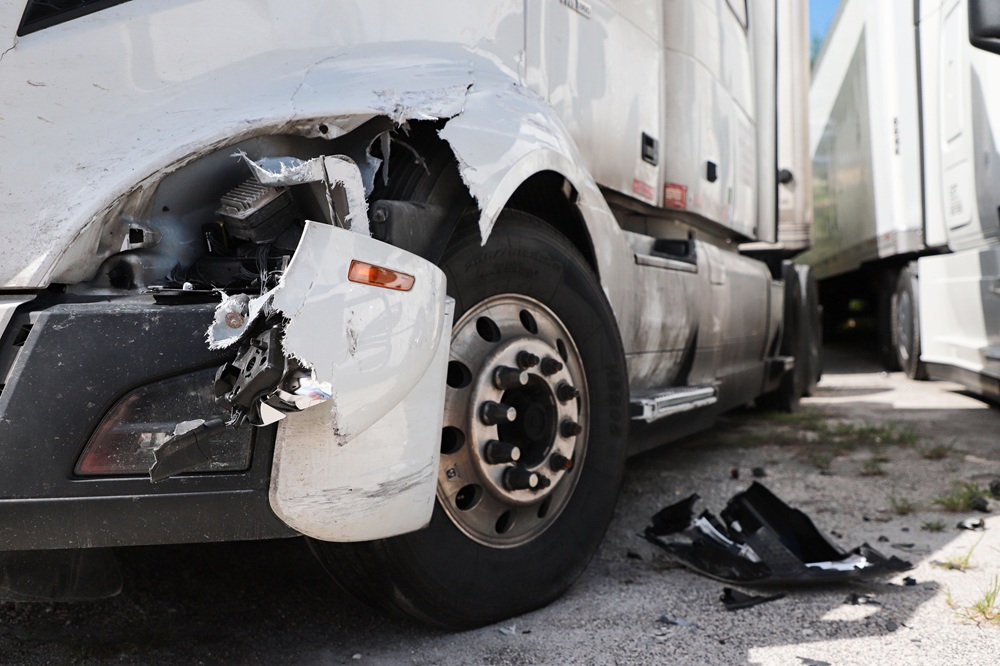
Most delivery vans on New Jersey roads do not belong to the company whose name is on the side. The driver works for a small third-party firm. The packages belong to a national brand. When a New Jersey truck accident happens with that van, all three ties land in one legal dispute. Case law in this area has moved steadily for several years. Recent decisions are putting more pressure on delivery brands directly.
The Contractor Defense and Why Courts Keep Rejecting It
The contractor defense is the first move every major delivery brand makes after a crash. Their driver is not our employee. The small firm hired them, paid them, and held the employer role. Any fault for the crash belongs with that firm.
Courts have pushed back on this in case after case. The reason is direct control. A brand that sets routes, times windows, tracks driver speed through an app, and scores output after each shift is not acting like a client. It acts like a boss. Courts examine how the work ran, not what the contract says it was.
New Jersey lawyers handling truck accidents in these cases say delivery app data is now the core proof. Route logs, time stamps, and speed records show what the driver did and who directed it at the time of the crash.
New Jersey Truck Accident Law and the ABC Test
New Jersey uses the ABC test to sort workers, a classification standard the New Jersey Department of Labor enforces when employment status is disputed. A hiring firm must prove three things to call a worker a contractor. The worker must run their own job without direction. The work must fall outside the firm’s main trade. And the worker must have a business of their own.
Delivery drivers fail most of these in practice. The brand sets the route and the pace through software. Shipping packages is the brand’s core trade, not a side task. And most drivers work for one firm through one app with no other clients.
When a driver fails the ABC test, New Jersey law calls them an employee. A car accident claim against a wrongly labeled delivery driver is never just a fight with one party. Every New Jersey truck accident claim tied to that driver then extends up the chain. The firm faces fault. The brand may face it too, based on how much it ran the driver’s work.
Federal Rules in New Jersey Truck Accident Cases
Many delivery vans weigh more than 10,001 pounds when loaded. That weight puts them under Federal Motor Carrier Safety Administration rules. The FMCSA sets standards for driver records, vehicle checks, and work hours, and the firm whose DOT number is on the van holds federal responsibility for how that van runs on public roads.
That DOT number is a federal record. It does not change based on how the brand describes its contractor setup.
FMCSA files sit outside the delivery brand’s reach. Driver records, check logs, and work hour files are all available through federal channels. When those files show rule breaks, the legal standard shifts. Negligence per se means the rule break itself is the proof, and the victim does not have to show how the standard of care failed.
That said, FMCSA violations do not automatically win a case. Courts still examine whether the specific violation caused the specific harm at issue, which is its own factual dispute and sometimes a difficult one. Every New Jersey truck accident case with a regulated van carries this federal layer, but how far it goes depends on the facts.
Some operators running delivery routes in New Jersey incorporated less than eighteen months ago. Their insurance history is thin, and their policy limits sometimes do not cover serious injuries. That is part of why identifying all defendants early, including the brand, demands more work in these cases than in a standard two-car crash.
When Cargo Packing Drives the Claim
Not every crash traces to the driver. Some New Jersey truck accident claims come down to how someone packed the cargo. Boxes that shift in transit can cause a loss of control with no fault on the driver.
The party that packed the van may be a warehouse, a freight broker, or the brand itself. A products liability claim against that party runs alongside any fault claim against the driver. One crash can pull in the firm, the packing party, and the brand at once.
New Jersey Truck Accident Claims: Steps for the First 48 Hours
When a delivery van hits your car in New Jersey, record the van before anything else. The third-party firm’s name is usually on the side next to the brand logo. Get both. Take photos of the driver’s ID and the van’s condition. Ask police to note the van as a commercial delivery vehicle in the report, not just a van.
File the claim against the firm, not just the driver. Ask whose DOT number is on the van. Find out which policies cover drivers on active routes. Pull the app data through counsel before it gets deleted.
Catastrophic injuries from commercial truck crashes need a different cost analysis than a fender-bender. Spinal cord damage and brain injuries carry costs that outlast the crash itself by years. Lost wages, future care, and recovery timelines all need specialist input, not a standard adjuster review.
The insurance setup in a New Jersey truck accident is not the same as in a rideshare case. A rideshare accident in New Jersey runs under a platform insurance model with defined coverage tiers. A delivery van case involves the firm’s policy, any umbrella held by the brand, and possibly FMCSA carrier coverage depending on vehicle class. The app data from the crash window, including the assigned route and the delivery timer the brand set, is often the first thing a commercial vehicle attorney needs.
Frequently Asked Questions
If a delivery van hits my car in New Jersey, who do I sue?
That depends on how much the delivery brand controlled the driver’s work. If the brand set the routes, timed the deliveries, and tracked the driver through an app, it may face liability alongside the firm that officially hired the driver. The DOT record, the app data, and the firm’s policy tell you which defendants belong in the case. An attorney who handles commercial vehicle claims can pull all three before filing.
Does FMCSA apply to delivery vans, or only big trucks?
Weight sets the rule, not vehicle type. Any vehicle over 10,001 pounds in commercial use falls under FMCSA rules. Many delivery vans hit that weight when loaded. If the van had a DOT number on the door, federal rules applied to that vehicle and its driver on the date of the crash.
Can I recover if the driver says shifting cargo caused the crash?
Yes. Cargo packing is a separate fault theory. The party that packed the van carries exposure on its own, and that claim runs beside the fault claim against the driver. A crash from bad packing can name several defendants at once.
The Fault Does Not End With the Driver
Fault in a New Jersey truck accident involving a delivery van rarely ends with the person driving. The firm, the brand, and the packing party may all carry some exposure based on the facts. Filing against the driver alone leaves the rest of that structure in place.
The full picture in a New Jersey truck accident claim requires knowing who employed the driver, whose DOT number was on the van, and what the app recorded at the time of impact. Most attorneys handling these cases say the defendants not named in the first filing are the hardest to add later.
Sources
Federal Motor Carrier Safety Administration, Commercial Vehicle Regulations
New Jersey Department of Labor, Independent Contractor Classification Overview
National Highway Traffic Safety Administration, Large Truck Crash Facts
New Jersey Courts, Employer Liability and Respondeat Superior Standards